Ndebele People Traditions & Culture

TRIBES PEOPLE GROUPS - 
Ndebele
They are also known as the Matabele or amaNdebele from South African and Zimbabwe
Although the origins of the South African Ndebele are shrouded in mystery, they have been
identified as one of the Nguni tribes. The Ndebele
people were originally an offshoot of the Nguni people of
KwaZulu-Natal, South Africa. The language amaNala and amaNzunza are
related to that of the Ndebele people of Zimbabwe. 
The Ndebele are a branch of the Zulu's who split from
King Shaka in the early 1820s under the leadership of Mzilikazi, a
former general in Shaka's army. In the 1820's Mzilikazi
over-powered the Manala and decided to settle down with them. After
some time, Mzilikazi became afraid
that Shaka would send an army after him.  With a clever plan he lured the Ndebele men away, got the others together and
killed them. He then took the women and livestock and then moved
northwards in 1834 into present-day Zimbabwe where they battled
with the Shona people; eventually carving out a home now called
Matabeleland and encompassing the west and southwest region of the
country and finally settled in Bulawayo in Zimbabwe. That is the
origin of the Ndebele of Zimbabwe.
With a clever plan he lured the Ndebele men away, got the others together and
killed them. He then took the women and livestock and then moved
northwards in 1834 into present-day Zimbabwe where they battled
with the Shona people; eventually carving out a home now called
Matabeleland and encompassing the west and southwest region of the
country and finally settled in Bulawayo in Zimbabwe. That is the
origin of the Ndebele of Zimbabwe.
 Many Ndebele became formidable warriors, often
subjugating smaller chiefdom's and assimilating them into Ndebele society, and Ndebele clashed repeatedly with Voortrekker militias around Pretoria in
South Africa. The late nineteenth-century Afrikaner leader Paul
Kruger jailed or executed many of their leaders, seized their land,
and dispersed others to work for Afrikaner farmers as indentured
servants. Some of the land was later returned to a few Ndebele, often as a reward for loyalty or
recognition of status.
Many Ndebele became formidable warriors, often
subjugating smaller chiefdom's and assimilating them into Ndebele society, and Ndebele clashed repeatedly with Voortrekker militias around Pretoria in
South Africa. The late nineteenth-century Afrikaner leader Paul
Kruger jailed or executed many of their leaders, seized their land,
and dispersed others to work for Afrikaner farmers as indentured
servants. Some of the land was later returned to a few Ndebele, often as a reward for loyalty or
recognition of status.
Under apartheid, many Ndebele living in the
northern Transvaal were assigned to the predominantly
seSotho-speaking homeland of Lebowa, which consisted of several
segments of land scattered across the northern Transvaal. Others,
mostly southern Ndebele, who had retained more
traditional elements of their culture and language, were assigned
to KwaNdebele. KwaNdebele had been carved
out of land that had been given to the son of Nyabela, a well-known Ndebele fighter in Kruger's time.
KwaNdebele had been carved
out of land that had been given to the son of Nyabela, a well-known Ndebele fighter in Kruger's time.  Ndebele traditionalists, who pressed for KwaNdebele independence through the 1980s, therefore, prized the homeland.
 In recent years, the
population of the Ndebele in Zimbabwe has been
diminishing due to the genocide that was carried out by the
Zimbabwean government on the Ndebele and secondly
migrating to other countries, especially South Africa in search of
jobs and as after-effects of the genocide and the economic crisis
that has gripped Zimbabwe since 2000
In recent years, the
population of the Ndebele in Zimbabwe has been
diminishing due to the genocide that was carried out by the
Zimbabwean government on the Ndebele and secondly
migrating to other countries, especially South Africa in search of
jobs and as after-effects of the genocide and the economic crisis
that has gripped Zimbabwe since 2000
Crafts
The Ndebele people are well known for their
artistic talent - especially with regard to their painted houses
and colorful beadwork .For over a hundred years, the Ndebele have decorated the outside of their homes
with designs.  Multi color wall paintings are painted by using their
fingers, the most frequent theme, as in wall painting, is the
house. Gables, gateways, steps, roofline's and light fixtures may
all be recognized on women's aprons and on walls. These reflect the
domestic interests of women, and may point to aspirations of
idealized homes. The dresses and beautiful decorated homes of the Ndebele people in South Africa are unique in
Africa. Many a fashion model would envy the elegance, color and
presentation of well-dressed Ndebele women.
Multi color wall paintings are painted by using their
fingers, the most frequent theme, as in wall painting, is the
house. Gables, gateways, steps, roofline's and light fixtures may
all be recognized on women's aprons and on walls. These reflect the
domestic interests of women, and may point to aspirations of
idealized homes. The dresses and beautiful decorated homes of the Ndebele people in South Africa are unique in
Africa. Many a fashion model would envy the elegance, color and
presentation of well-dressed Ndebele women. One form of
early design was made with earth pigments, ranging from bright
yellow to brown. The pigments were ground up and mixed with liquid
to form a "paint" that was used to decorate door and window frames,
bordered with charcoal. The earlier patterns are believed, unlike
the more recent painted patterns, to have sacred powers and to have
been made in response to demands by the ancestors
One form of
early design was made with earth pigments, ranging from bright
yellow to brown. The pigments were ground up and mixed with liquid
to form a "paint" that was used to decorate door and window frames,
bordered with charcoal. The earlier patterns are believed, unlike
the more recent painted patterns, to have sacred powers and to have
been made in response to demands by the ancestors
Exclusively the Ndebele women, who are renowned for their artistic skills, have always done beadwork. Their beadwork and bead pattern-inspired mural paintings in particular have become an integral part of Ndebele culture. The motifs used in beadwork and in wall painting show great vitality and dynamic response to the changing world around the artists. Stylized plant forms may express a hope for good harvests in a dry region.
Colorful dresses, metal rings and beaded hoops are used. The beadwork is sometimes so elaborate that garments and trinkets can only be removed by destroying it. The rings around the ankles as well as necklaces remain there for most of the wearer's life.
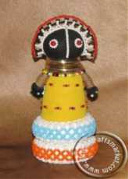
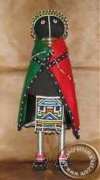
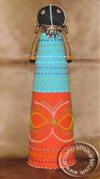

A selection of African Ndebele crafts on African Crafts Market
Click here Learn about more African tribes and traditions
The Ashanti tribe ~ The Bushman tribe ~The Maasai (Masai) tribe ~The Ndebele tribe ~The Shona tribe ~ The Teke people / Kidumu tribe ~The Zulu tribe
AFRICAN CRAFTS MARKET is a company situated in South Africa that has many Zulu pieces of art available for sale, from the lovely Zulu bead work and grass weave baskets through the traditional Zulu shields. To view the items that may be of interests to you go to our gallery pages on our website at www.africancraftsmarket.com



Shopping Cart
View shop-cart/checkout
Search
Website currency
Prices in US$
Shop Products
- Abstract art
- African figures
- African heads
- Animal skins
- Bead work
- Belts
- Candles
- Candle holders
- Canes
- Chessboards
- Clothing
- Cooking utensils
- Cushions
- Drums
- Footwear Shoes
- Furniture
- Gemstones
- Hats
- Horns & skulls
- Jewelry
- Leather
- Lights & Shades
- Masks
- Ostrich eggs
- Paintings
- Stone animals
- Stone Eggs
- Stone tableware
- Table cloths
- Wire art
- Wood animals
- Wood tableware
- Woven baskets
- Zulu shields
- .

Useful Links

Featured Item


Info
We work with crafters throughout Africa to find a vast range of handcrafted items and then send them worldwide.
All items are produced in Africa by local Africans
