Shona People Traditions & Culture

TRIBES PEOPLE GROUPS
Shona
The Shona tribe is Zimbabwe's largest indigenous group, their
tribal language is also called Shona (Bantu) and their population
is around 9 million. They are found in Zimbabwe, Botswana and
southern Mozambique in Southern Africa and bordering South Africa.
Representing over 80% of the population, the Shona tribe is
culturally the most dominate tribe in Zimbabwe. There are five main
Shona language groups: Korekore, Zeseru, Manyika, Ndau, and
Karanga. The Ndebele largely absorbed the last of these groups when
they moved into western Zimbabwe in the 1830s.
Traditionally, Shona people live in isolated settlements, usually
consisting of one or more elder men and their extended families.
Most decisions are made within the family, although organized
political states were recognized as a source of centralized power.
A principal chief who inherited his position and power in the same
divine manner as a king headed them. He usually lived in a
centralized location and was complemented by his court that advised
him about most important decisions.
Shona people live in isolated settlements, usually
consisting of one or more elder men and their extended families.
Most decisions are made within the family, although organized
political states were recognized as a source of centralized power.
A principal chief who inherited his position and power in the same
divine manner as a king headed them. He usually lived in a
centralized location and was complemented by his court that advised
him about most important decisions.  The head chief often received substantial payment in
the form of tributes from his constituency.
The head chief often received substantial payment in
the form of tributes from his constituency.
The Shona believe in two types of spirits. Shave spirits are
most often considered to be outside or wandering spirits and
vadzimu are ancestor spirits. Shave spirits are connected to
populations living outside of Shona territory and may be connected
to neighboring people. These spirits may be
either malevolent or benevolent. Bad spirits are associated with
witchcraft, while good spirits may inspire individual talents
associated with healing, music, or artistic ability. Vadzimu
represent all that is ideal and moral about a Shona way of life.
They are usually associated with recent ancestors or with more
remote culture heroes whose exact genealogy has been forgotten.
They serve to protect society, but may withdraw this protection if
the Shona moral ideals are not respected
It was in the late 19th century that the peoples of this area
speaking several mutually intelligible languages were united under
the Shona name. Although known for their stone sculpture, the Shona
Tribe of Zimbabwe has a rich artistic heritage, which includes
decorative fabric painting using sadza too. Sadza (pronounced
sudza) is Maize, a primary basis of their diet. Maize (corn) is
ground into a fine meal, which is then cooked with water until it
is the consistency of mashed potato. Although eaten plain, sadza is
often served with a vegetable or meat sauce to give it flavor. This
painting technique uses the sadza instead of wax as a masking
between the different paint colors. After painting, the canvas is
left to dry in the sun. Finally, the fabric is washed to remove the
sadza leaving it with a unique finished appearance. Designs often
use traditional geometric patterns mixed with stylized objects from
everyday Shona life
Shona artist are well known for their stone sculptures and are
typically called "Shona" sculptures because it is the name of the
tribe in Zimbabwe that has traditionally created these works of
art. The stone carving has been part of the Zimbabwean culture
since 1200 AD when Great Zimbabwe, an archaeological masterpiece of
their early ancestors, was built.
 The re-emergence of this stone carving tradition in
the 1950s, the solid forms and beautiful surfaces of Shona
sculpture express an extraordinary emotional power". Today the art
form commands worldwide recognition with the world's most talented
carvers being recognized in Zimbabwe
The re-emergence of this stone carving tradition in
the 1950s, the solid forms and beautiful surfaces of Shona
sculpture express an extraordinary emotional power". Today the art
form commands worldwide recognition with the world's most talented
carvers being recognized in Zimbabwe 
The Shona sculptures are produced from a variety of stones.
Serpentine stone, with its considerable range of colors and
hardness, is the material most commonly used by the sculptors. Most
serpentine stone used was formed over 2.6 billion years ago.
Serpentine stone exists in a diversity of colors including black
(the hardest and least common), browns, mauves, greens, and
yellows. Sometimes sculptures are also made semi-precious stones
like "Leopard Rock" and Verdite.
Drawing on ancient sculpting traditions they have produced a modern art movement of dignified, exquisite works. Reminiscent of Picasso and Henry Moore, these extraordinary, intense works speak to all humanity.
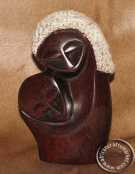

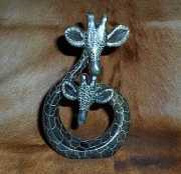

A selection of African Shona crafts on African Crafts Market
Click here Learn about more African tribes and traditions
The Ashanti tribe ~ The Bushman tribe ~The Maasai (Masai) tribe ~The Ndebele tribe ~The Shona tribe ~ The Teke people / Kidumu tribe ~The Zulu tribe
AFRICAN CRAFTS MARKET is a company situated in South Africa that has many Zulu pieces of art available for sale, from the lovely Zulu bead work and grass weave baskets through the traditional Zulu shields. To view the items that may be of interests to you go to our gallery pages on our website at www.africancraftsmarket.com



Shopping Cart
View shop-cart/checkout
Search
Website currency
Prices in US$
Shop Products
- Abstract art
- African figures
- African heads
- Animal skins
- Bead work
- Belts
- Candles
- Candle holders
- Canes
- Chessboards
- Clothing
- Cooking utensils
- Cushions
- Drums
- Footwear Shoes
- Furniture
- Gemstones
- Hats
- Horns & skulls
- Jewelry
- Leather
- Lights & Shades
- Masks
- Ostrich eggs
- Paintings
- Stone animals
- Stone Eggs
- Stone tableware
- Table cloths
- Wire art
- Wood animals
- Wood tableware
- Woven baskets
- Zulu shields
- .

Useful Links

Featured Item


Info
We work with crafters throughout Africa to find a vast range of handcrafted items and then send them worldwide.
All items are produced in Africa by local Africans
